Case Studies


Project Overview & Community Impact
The transformation of the Historic Dandridge High School stands as a premier example of how community history can be preserved while answering modern housing demands. Goss Dennison Design executed the comprehensive architectural master planning and adaptive reuse strategy to convert this historic 1927 school building into a modern, 38-unit high-end senior living community.
Located in historic Dandridge, Tennessee, this $12 million development successfully rescued a heavily blighted municipal landmark that had sat completely abandoned since 1990, turning an environmental and structural hazard into a stabilized, income-generating asset.
Structural Challenges & Adaptive Reuse Execution
Converting a nearly century-old educational facility into safe, accessible, and independent senior living apartments required navigating severe structural deterioration and strict regulatory guidelines:
• Blight Stabilization & Remediation: Having sat vacant for over three decades, the structure suffered from extreme water infiltration and catastrophic termite damage, particularly within the historic gymnasium floor and framing. GDD’s integrated loop process allowed the team to run real-time structural feasibility assessments, designing complex stabilization and remediation frameworks to secure the building’s core shell before interior programming began.
• Preserving Schoolroom Character: Because the building is listed on the National Register of Historic Places, the architectural design had to comply with rigorous state and federal preservation standards. GDD ingeniously mapped out the 38 residential units to fit within the original historic schoolroom boundaries. This layout preserved the expansive historic window configurations, high ceilings, and wide educational corridors, maintaining the nostalgic character of the original building.
• Senior-Optimized Accessibility: To accommodate senior independent living, the interior architecture required a complete utility infrastructure overhaul. GDD seamlessly integrated modern HVAC zoning, energy-efficient fixtures, advanced fire-separation assemblies, and updated flooring—all tailored for universal accessibility and senior safety—without compromising the historic, unblemished visual profile of the 1920s craftsmanship.
Regulatory Compliance & Development Precision
Aligning historic grant guidelines with multi-family development metrics requires an architecture team that understands complex capital execution. GDD’s highly detailed technical documentation and precise material specifications ensured the project met every compliance benchmark required to successfully leverage public-private preservation funding, securing a stabilized, buildable solution that honors local heritage.
Project Overview & Technical Scale
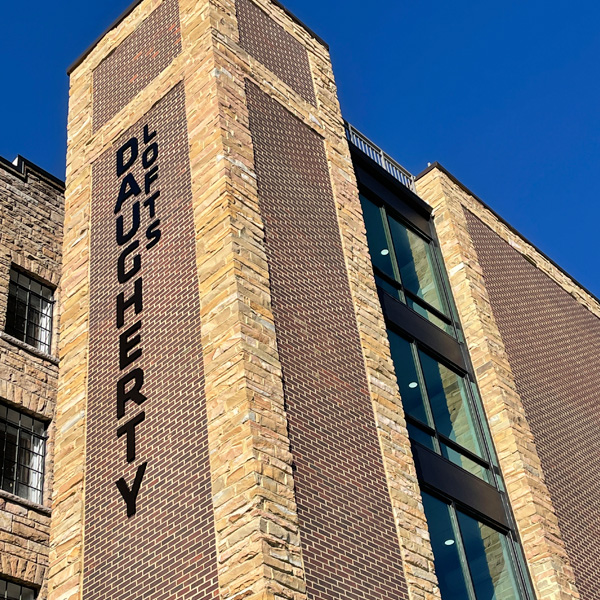
The transformation of the Daugherty Building stands as a premier example of commercial adaptive reuse and preservation-led revitalization in East Tennessee. Goss Dennison Design executed the master planning and technical architectural delivery to convert this historic, 5-story vernacular commercial landmark-originally built between 1938 and 1942 as the Daugherty Furnishings store-into 39 modern, high-density residential loft apartments.
Located at 307 N. Main Street in downtown Clinton, Tennessee, this project required balancing rigorous historic preservation standards with modern building code integration and heavy structural remediation.
Structural Challenges & Architectural Execution
The Daugherty Building presented unique engineering and spatial constraints that standard architectural designs could not solve in a vacuum. GDD utilized an integrated design loop to address critical structural anomalies before and during construction:
• The Inverted Step Pyramid Framework: The building was originally constructed with massive load-bearing brick walls that thin as they rise, measuring 26 inches thick in the basement and tapering down to 12 inches thick on the fifth floor. GDD meticulously planned the interior layouts and utility runs to accommodate these varying interior wall depths without sacrificing modern living space.
• Vernacular Stone Preservation: The building’s striking exterior features 99,000 pounds of hand-chiseled, locally quarried stone sourced from Morgan County. Our design prioritized the preservation of this distinct regional masonry, ensuring all cleaning, repointing, and structural stabilization met the strict criteria required for federal historic register compliance.
• Modern Infrastructure Integration: To convert a heavy-timber warehouse environment into safe, multi-family housing, GDD designed and detailed an external concrete elevator shaft and secondary egress fire stairs at the rear of the property. This structural addition brought the building up to modern International Building Code (IBC) and accessibility compliance while fully preserving the historic, unblemished visual profile of the front facade.
Capital Stack Optimization & Developer Math
Because our design philosophy is informed by real-world development experience, GDD structured the space planning and architectural documentation to support complex financing mechanisms. The architectural drawings, fire separation details, and material specifications were rigorously aligned with state and federal program requirements, helping the development team successfully unlock and integrate:
• $9 Million in Low-Income Housing Tax Credit (LIHTC) equity.
• $1.4 Million in Federal Historic Tax Credit (HTC) equity.
• Total project stabilization budget of $14.29 Million.
Accolades & Authority Validation
In recognition of its technical precision and community impact, Goss Dennison Design was selected as the recipient of the prestigious Preservation Merit Award for the restoration of the Daugherty Lofts. This accolade independently validates our firm’s capability to transform endangered, blighted commercial assets into high-performing, long-term regional real estate investments.